

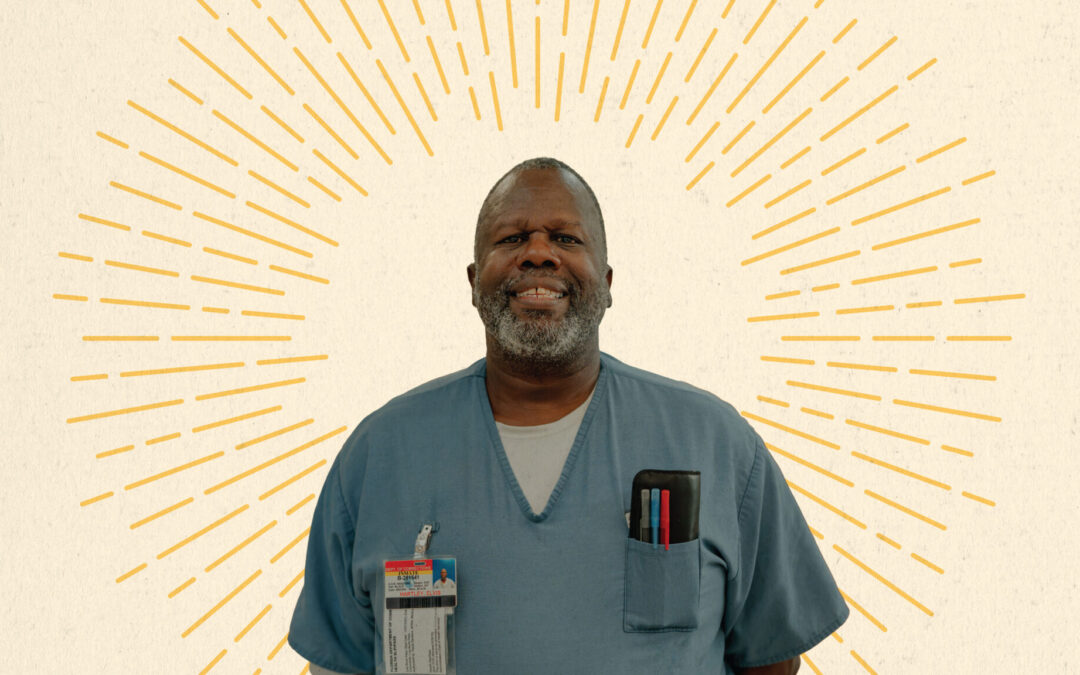
A rubber band holds together the Crossroads letters Elvis keeps in his locker. He has read them many times. He will read them again the next time he comes across them and maybe share them with other men in the dorm. Now, though, he is clearing out his belongings, preparing to go home, after forty-four years in prison. He knows what he will do with the letters. them with other men in the dorm. Now, though, he is clearing out his belongings, preparing to go home, after forty-four years in prison. He knows what he will do with the letters.
“I’m gonna take all my letters and stuff with me,” he says. “I’m taking all that with me when I go home.”
For much of his incarceration, his parents wrote to him almost every week. His mother had made sure he went to church as a child; he remembers services that lasted from eleven until four. Later, her letters helped keep him connected to life outside. Both parents have since died, along with his two sisters and five brothers. His brother’s funeral was recently held.
About these losses, Elvis speaks quietly. He credits his faith with helping him endure and remain strong for his family. When he first entered prison, he did not know whether he would survive. He was angry, and for a time he stayed away from church. But he eventually began attending services and singing in the choir. He dates his decision to follow God to 1996.
“I made it because of the Lord,” he says. “Because He was with me.”
Much of the life he describes is solitary. He keeps to himself, reading his Bible on his bed while things go on around him in the dorm. He has witnessed a lot of violence during his years inside. He has also continued writing to people outside, hoping to hear how they are doing and telling them what is happening in his own life.
Many of those letters go unanswered, but one niece has kept in touch, and he is grateful for her correspondence. He would love to hear from other relatives, too. He sends letters even when the last one has received no reply.
“I still write them and let them know that I still love them,” he says.
He thinks of Scripture’s instruction not to return evil for evil. In his own correspondence, he continues making room for an answer. There is news he wants to share, affection he wants his family to know is still there. His niece has remarked on how often he writes about the Lord. Elvis likes writing about his faith. He likes writing, period.
Crossroads entered this life through a paper he noticed on a desk. He filled it out and mailed it in. A lesson arrived, and he began studying. He enjoyed the material and continued with it. The letters that came with his lessons gave him more to read, words addressed to him that he could keep and return to.
“I read everything over and over again,” he says. “The letters they send me and stuff.”
He describes feeling love in the letters. The stack in his locker gives him repeated opportunities to receive it. A letter can arrive once and be read many times, its encouragement available again on any ordinary day in the dorm.
Elvis has begun passing Crossroads enrollment papers to other men there. He tells them about the Bible studies and gives them a way to take part. The man who prefers to stay by himself has found something he wants others to have.
When he talks about going home, he says he wants to return to his mother’s church. The congregation knows he plans to come, though he expects to meet many people who have joined during his absence. He wants to sing in the choir again.
His mother will not be there, but there will be new faces and familiar things to begin doing again. He intends to continue his Crossroads lessons, completing them and sending them back. The correspondence will have a place in the life he is preparing to enter.
He is taking the letters with him.
Watch Elvis share his story.
Help make Bible study and encouragement available to more people in prison. Explore ways to mentor, give, or get involved with Crossroads.