
As prisons increasingly move education, communication, and mail processes onto tablets, Crossroads is preparing to bring the same faithful mentoring experience to students learning in digital spaces.
For decades, Crossroads Prison Ministries has met students through the mail. A student completes a Bible lesson, sends it to Crossroads, and receives thoughtful feedback and encouragement from a mentor who has prayed over the work and responded with care. That correspondence has always been more than a process. It is a ministry of presence, reminding men and women in prison that they are seen, known, and loved by God. That mission has not changed.
At the same time, the world inside correctional facilities is changing. Across the country, more prisons and jails are using secure tablets to deliver education, reentry resources, and personal development programs. These tools expand access to learning materials and programs for incarcerated people, and they are also becoming part of broader efforts to reduce the amount of paper entering facilities as synthetic drugs and other contraband increasingly move through mail systems. As a result, ministries like Crossroads are encountering more restrictions and uncertainty when sending physical lessons to students.
That shift matters for Crossroads because access to paper-based lessons can no longer be assumed in every facility. In some locations, changing mail policies have made it difficult or impossible for students to participate in Crossroads programs, cutting off access for many students who were previously engaged in Crossroads Bible studies. As more students are learning on tablets, Crossroads wants to be present there too, not as a replacement for relationships, but as another pathway for students to encounter Scripture, receive encouragement, and continue growing in faith. Rather than viewing these changes only as obstacles, Crossroads sees an opportunity to reconnect with students who have lost access to Bible study and Christian encouragement through Crossroads.
A Faithful Response to a Changing Environment
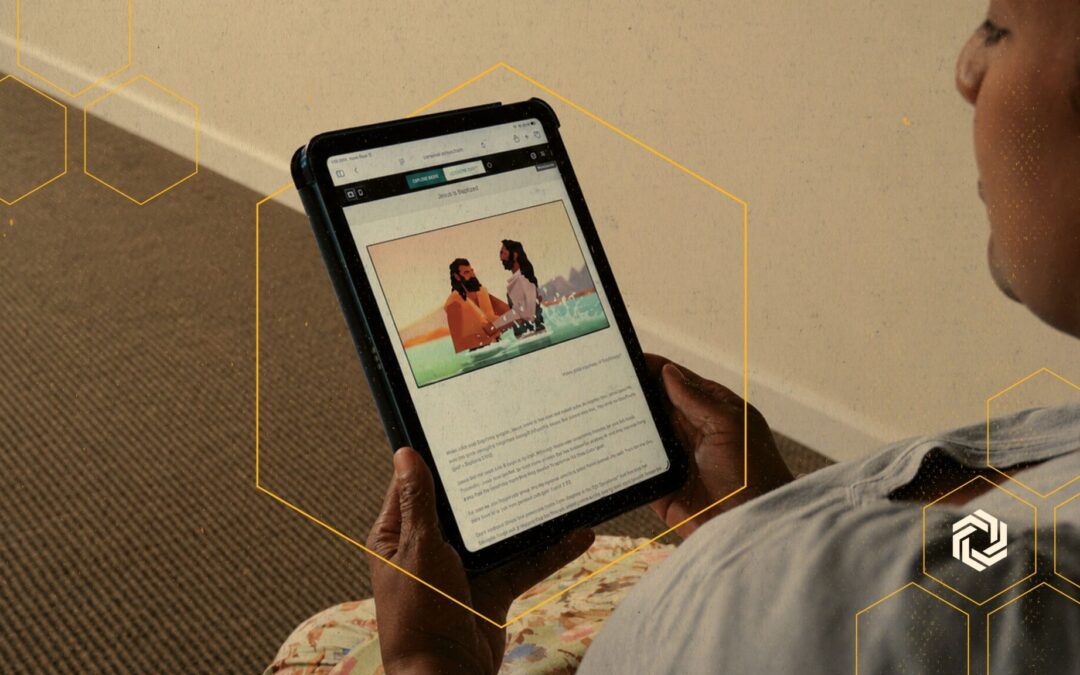
Crossroads is preparing to launch a digital lesson experience through Edovo, a correctional learning platform used in facilities across the United States. The goal is simple: make Crossroads lessons available to students who may not have the same access to physical mail, while preserving the heart of the ministry—Scripture study, prayerful feedback, and personal encouragement from mentors.
Planning for this transition has required careful discernment. A digital course cannot simply be a scanned version of a paper lesson. Students will interact with lessons differently. Mentors will receive student responses in a new format. Operations staff will need new workflows. And because digital learning allows students to move at their own pace, the mentoring model must remain sustainable for volunteer mentors.
What Will Stay the Same
One of the most important decisions has been to keep mentoring at the center. Digital students will still be connected to Crossroads mentors. Lessons will still be reviewed by people who care. Students will still receive encouragement rooted in Scripture and prayer.
The courses and lessons themselves will remain familiar. Students will continue working through the same Bible-centered curriculum that has guided Crossroads students for years. In the digital format, each lesson will include three short videos to help introduce, reinforce, and guide the learning experience while keeping the focus on Scripture and reflection.
What Will Change
Some parts of the process will look different. Because lessons are available digitally, students can begin studying right away and move through lessons at their own pace without the delays often associated with traditional mail. Students will be able to progress through lessons more quickly, which means a mentor could receive more than one lesson from the same student in a week. To keep the ministry sustainable while supporting that increased flexibility, Crossroads is simplifying progress reporting for mentors and asking one-to-one mentors to write one letter per week, even if several lessons are forwarded at once.
Mentors will also receive lessons in a different format. Because Edovo provides student responses only, mentors will receive response sheets that include student information, questions, and answers. Crossroads is updating mentor answer keys to include lesson content so mentors have the context they need when writing back.
A Thoughtful Launch
Crossroads began with a soft launch at one Tennessee facility in August. That early step gave the team an opportunity to test the student experience, refine internal processing steps, and identify gaps before expanding more broadly. The initial focus remains on facilities where Crossroads currently cannot engage students through traditional mail, with a fuller launch planned by the end of this month.
As the launch expands, staff will be paying close attention to how the process works in practice. They will monitor mentor and staff capacity, watch for places where the process can be clearer or more efficient, evaluate how well the digital experience is serving students and mentors, and make updates or fixes as needs emerge.
Looking Ahead
After the digital lesson experience takes shape, Crossroads will continue exploring ways technology can support the ministry without replacing the human connection that makes it distinctive. Future possibilities include expanding Crossroads’ presence on additional learning platforms, implementing AI-assisted tools to help identify returned student lessons that need staff attention, and continued exploration of digital mentoring opportunities.
For now, the focus is on faithfulness: listening carefully, moving slowly, and building a digital pathway that serves students well. Crossroads is not leaving behind its correspondence roots. Instead, the ministry is asking how the same mission can be carried forward in a changing correctional landscape—so that more students can study God’s Word and receive encouragement from mentors.